Wednesday, September 17, 2014

tHis iS NOt hoW i wAntEd MaRGo

I just saw the news, and I'm not thrilled with the casting choice for Margo Roth Spiegelman in the upcoming Paper Towns movie.

Paper Towns was the first book by John Green that I ever read. I had recently started following his vlog, and when I realized he'd published a few YA novels I was interested. When I checked out Paper Towns from the library my hopes were neither high nor low; I didn't know what to expect.

What I got was a novel with a unique storyline, well structured themes, a compelling mystery, and fully realized characters. Not since reading about the folks of Maycomb County had I felt so emotionally connected to a cast of fictional characters. Their friendships and hopes mattered to me. It was the first book in several years that I stayed up all night to finish in one sitting. I loved it. I still love it.

In the book, enigmatic Margo Roth Spiegelman is the it girl of her high school. She is smart, interesting, adventurous, and sexy. And she's kind of fat.

The word "fat" can mean a lot of things in our society. There are gorgeous plus sized models who have that golden ratio in larger proportions, and there are those whose ratios are somewhat less than golden through their flabby mid sections, and there are people who have bodies that can't support their own weight. A pregnant woman is fat. If you can't make out someone's bones through their skin it's usually because of fat. The number on a pair of jeans rather than the belly that does or does not hang over them determines fatness. Even a thin person with more visible cellulite than muscle tone is called "skinny fat." That one word is used to encompass a myriad different ways we judge each other's appearance. We can't seem to specifically define fat but we know we don't want to be it. Usually fat means unattractive, but not in every case and certainly not in the case of Margo Roth Spiegelman.

The book describes her as having a curvaceous body type, complete with breasts and hips, thighs and butt. She's sensitive to comments about her size, even though she can run, climb, jump, talk fast, and kiss a boy, all without getting winded. Personally, I pictured Margo along the lines of a plus size model: a fit but thick hourglass body type with round cheeks and only one chin. The person they chose to play her in the movie is lovely, but she is not thick. She is not fat.

I'm not here to skinny shame. I think healthy is more attractive than not, but I don't think that one type of healthy body is more attractive than another type of healthy body. I don't think that Pink is any more or less attractive than Lauren Ash or Kate Moss, for example, despite their different body types. Tall, short, pudgy, toned, delicate, brawny, hourglass, lanky, willowy, thick, round, chubby, dark or pale, freckled skin or clear, straight or gap-toothed, big or small nosed, an oval face or highly defined cheekbones, whether or not walking causes a jiggle of flesh, there are only about a million different ways to be attractive on this Earth. Unfortunately, one type is far more represented in media than the rest, and I don't have to specify which one that is.

Her body is not the most important thing about her character, but it does factor into her character. It affected how she thought about herself and interacted with others. Margo, like all humans and fully realized characters, is a lot of things. Her body is only one part of her, but it's a part I really like. Margo having the body type she has in the book is a fresh breeze in pop culture. Hollywood has (unsurprisingly) blown a chance to represent another side of beauty, opting instead for a fashion model.

The funny thing is that Margo doesn't have a lot of screen time, if the movie follows the book. Her friend, Lacey, who is really thin, may be more present. There was no need to hack at Margo when Lacey is there to represent the type beauty we're all used to.

The other funny thing is that the point of Margo [spoiler alert] is that you don't get to decide who or what someone else is. Who you think they are usually isn't who they actually are. Who they are to you isn't who they are to themselves. In the beginning, we see Margo as Q's manic pixie dream girl, and she does have some of those qualities, but we come to find out that she is a whole person and she's not perfect and she's not a dream. She's smart but she's got some dumb ideas. She's had a lot of experiences but she isn't all that mature. She's got a pretty good life at school, but not at home. Some might say that she's completely gorgeous but she's a little fat. And most importantly, she does not exist solely to make our hero learn things about himself and become a better person. She does do that, but so do his other friends. She was misjudged and put on a pedestal for years, and she did all she could to break away from that. Movie producers choosing someone with a thinner body type seems a lot like the kids at her school romanticizing her life for her. It's wrong. I don't like it.

I'm sure Cara Delevingne will do fine as Margo. I know John Green is very excited about her, and he "knows" Margo better than any of us. It's not going to ruin the movie or anything, it's just not what I wanted. This is what Hollywood does, though. They did it to Cassidy in The Spectacular Now; Brie Larson is pretty, but she is not the, "gloriously fat," kind of pretty that Sutter describes in the book. Now they're doing it to Margo Roth Spiegelman. This makes me really nervous for the Eleanor & Park movie that's also in the works. If Margo's body type was a somewhat minor detail, Eleanor's is a major plot point. Please, please, please, give me a thick-bodied, freckle-faced Eleanor with unruly red curls.
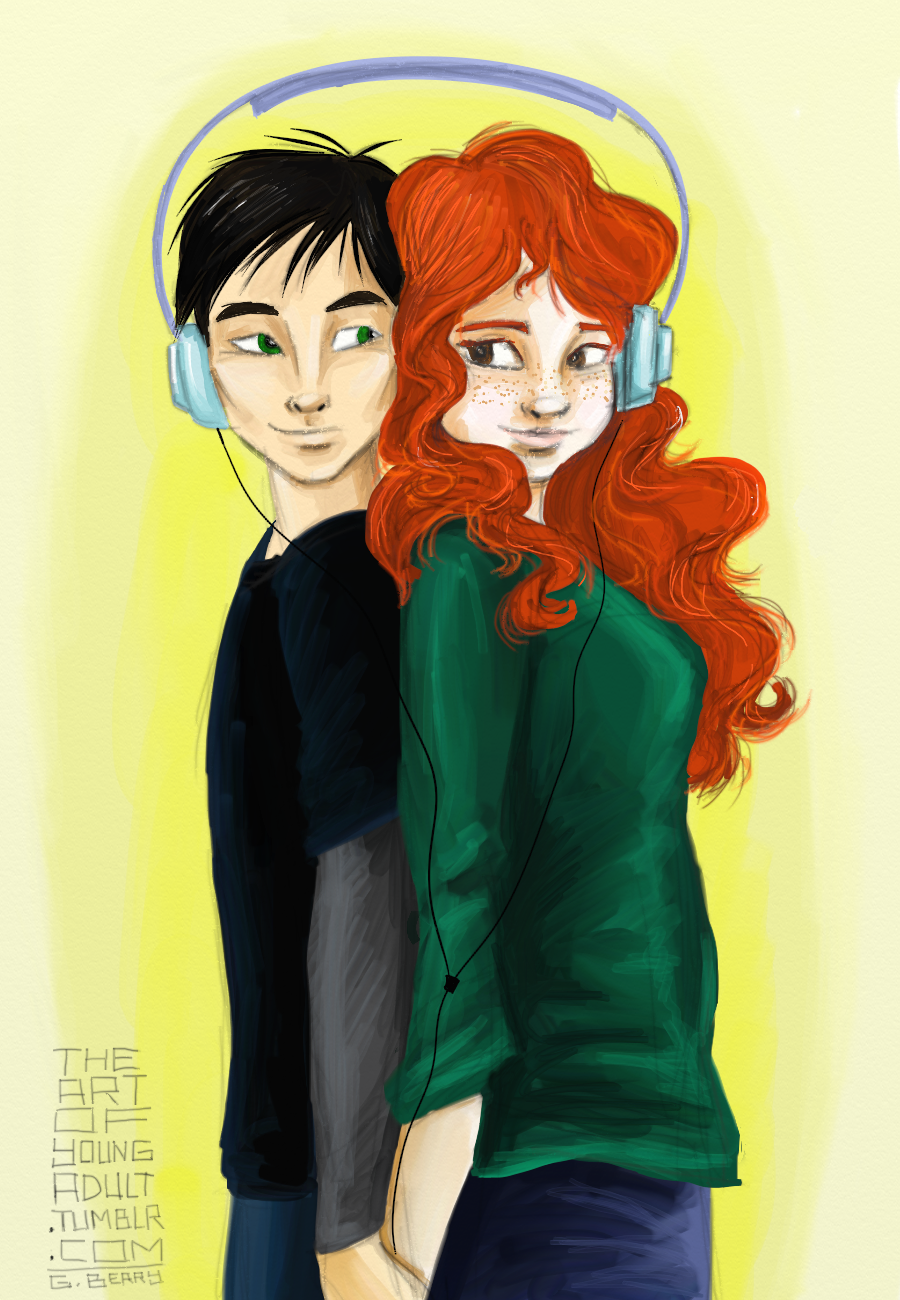
http://theartofyoungadult.tumblr.com/search/eleanor+and+park

Thursday, September 11, 2014

Part 1 of a 2 Part Rant


I had an irritating conversation with a friend recently about race which got me thinking, which got me researching, which got me fuming. More on that later. First, read this: 

Image taken from an unfortunate article about a Tumblr post.

Ok. Let's go.

Perhaps it's true that many of the fairy tales Disney has chosen to make into movies originated in Europe, where the white folks come from. There’s debate about Frozen, but for argument’s sake we can lump it in with Beauty and the Beast, Cinderella, Brave (which is set in Scotland, not Ireland, by the way) and so on. That may justify the number of white princesses, but it also begs the question why so many European stories have been chosen over all the other stories in the world.

But even if these stories did originate in Europe, do we really think that Disney is overly concerned with historical or canonical accuracy? Is that the argument this person is making? Anachronisms abound in their films, and not just for comedic effect. Many of the movies are difficult to date or pinpoint on a map because the costumes are all over the place. That’s ok, they’re not trying to make documentaries; they’re making pretty, fun, silly, romantic stories. Accuracy doesn't really matter. Anyway, some of the Disney kingdoms are admittedly fictional and so don't have to conform to any specific culture or time. The people in these fictional kingdoms must remain Caucasian, though, obviously. 

Here's the thing, though: They didn't all originate in Europe. There are Cinderella stories from Egypt and China that predate the one we're used to from France. I doubt that's the only story with several possible origins, not all of them European. Where did the story of the Frog Prince come from? I don’t know, but I’m certain it predates the New Orleans jazz era. That setting makes for a pretty great story, though, so I guess artistic changes like that are ok. Look at Robin Hood - all of the characters are humanized animals. That’s not how the legend of the man in Lincoln green was told for centuries, but it made for a fantastic cartoon. A classic. One of my favorites. They had to make changes to Victor Hugo's The Hunchback of Notre Dame because with the rape and bestiality it's just not suitable for children. Similarly, the Greek myths of Hercules and the gods of Olympus are too violent and sexual for that G rating studios tend to shoot for with kiddie flicks, so of course that story had to be adjusted. They churched up Hamlet so that The Lion King could be rated G as well. Furthermore, they set it in Africa rather than Denmark (a country that's just full of white people) and used talking animals. In Rudyard Kipling's The Jungle Books, Baloo is a stern teacher rather than a lazy scamp, Shere Khan's name is Lungri, which means, "The Lame One," because he has a lame foot, and Kaa helps Mowgli and doesn't try to eat him. There is no King Louis in the book; he's a Disney invention. Speaking of Disney inventions, Madam Mim from The Sword in the Stone does not appear in T. H. White's novel The Once and Future King, which is the basis for that movie. If you close one eye and squint the other, you might be able to see her as a very loose interpretation of Morgan le Fay, but it's a stretch. There are other differences between that book and the movie, like that Kay was just slightly older than the Wart, and although he was a bit of a spoiled bully type the boys were pretty close friends all their lives. As for Merlin, he never turned the Wart into an animal without teaching him an important lesson about the world and politics. He was subtly training the boy to become a new kind of king without him realizing it, and that doesn't really come across in the movie. Anyone who read The Chronicles of Prydain by Lloyd Alexander cringes at the liberties Disney took with The Black Cauldron. In the original 1001 Arabian Nights, Aladdin was Chinese. Perhaps in the time and place it was written, not enough was known about Chinese culture to make that feel accurate, so again, a change is ok. In the imagination of Lewis Caroll, who wrote Alice in Wonderland, the heroine had dark hair like his granddaughter rather than blond. Disney's Pocahontas might be the most inaccurate of all. It pretends to be based on historical events rather than novels and legends, but nearly every detail is incorrect. They aged the heroine, to start with. They also made her more beautiful, at least according to beauty standards of the western world in 1995. I’ve never seen a traditional Native American dress with a sweetheart neckline. They did this in order to sexualize I mean romanticize her. Her beautiful necklace is made of semi-precious stones found in the southwest even though her story takes place in the east. Her love interest was never a love interest, and her heroic act of saving him from her father is widely believed to be a lie John Smith told.

So if all of these changes are ok, how can anyone insist that any of the characters have to be anything? 

Furthermore, I think the Tumblr user and I have different opinions on what constitutes "plenty" of non-white ladies. Off the top of my head, I can think of 4 popular Disney heroines who aren't white (Pocahontas, Mulan, Tiana, Jasmine) and 8 who are (Snow White, Cinderella, Sleeping Beauty, Ariel, Belle, Merida, the Frozen sisters). I found a list of female Disney characters here. This list is not just for main characters; it seems to include every female to ever appear in a Disney story, some of them pretty obscure. I got 5 pages into the 62 page list and counted 49 white characters, 13 non-white characters, 4 who were racially ambiguous (though none of these were dark skinned by any means), and 18 non-humans. If you feel this research is inadequate I understand, and you're of course free to continue it on your own, but I'm going to go ahead and say that well over half of the female Disney characters are white (58.3% if you count the non-humans as technically not white, 74.2% if you don't count them at all because they're not human). Most of these non-white characters are relatively new. You can believe, like the Tumblr user, that they weren't created in response to social changes and fans clambering for representation, but I'll continue to believe the that they were. That's alright. It's good to change.

Finally, I wish to contest this person's closing argument, all proudly highlighted, that Disney does not whitewash. First of all, the first responder upon whom the ranter retched venom didn't say that the 4 heroines in the picture had been whitewashed; he/she just said they're all white, which they are. There are POCs (princesses of color) who could've been used for the picture but weren't. That's ok. We already established that the odds weren't in their favor, and princesses are great in any shade, including the light ones. Anyway, I think the point was to use Pixar/Disney princesses, not just Disney. However, just because THESE ladies weren't whitewashed doesn't mean Disney doesn't whitewash. But as mentioned above, there is some controversy over the Frozen characters being pale rather than looking like the Sámi people of Scandinavia. The changes made to Pocahontas are a form of whitewashing because they removed her cultural identity. Many people feel that when the heroines who were chosen to be "Official Disney Princesses," got glamorized for that promotion, they took on a whiter, more western appearance in a process known as whitewashing. It happens. Hollywood whitewashes, and Disney is a part of Hollywood. We live in a culture that still favors white people (more on that later).

I'm not saying that the princesses we're used to seeing as white should've been given another ethnicity, and I'm not saying that Disney should never make another white princess. I'm just saying it's silly to pretend that white isn't the go-to first choice for heroes in fiction when, clearly, it still is. Furthermore, railing against people who ask for more diversity in pop culture makes you look like an overly-sensitive, frightened of change bully. 

Thursday, September 4, 2014

Changes Afoot

I think I want a different name for this blog, but I have a few readers and I don't want to lose you. I'll make it a gradual change when I think of a new name. If you have any suggestions, let me know in comments.