Friday, December 19, 2014
Breathe
Ok, so that history paper is written, finals are taken, and I can relax for a minute. I miss my blog.

Sunday, November 23, 2014
Wednesday, November 12, 2014
Stupid Words
I had to get onto my niece the other day for using the word, "Jandals." That's the combination of the words, "Jesus," and, "sandals," and it's what some of the kids are calling Birkenstocks now. Ugh. Not in my house, young lady. It makes my skin crawl. In addition to being irreverent and the dumbest word I've ever heard apart from jorts (that's jean shorts, obviously), it's just fantastically wrong because that's not what they're called. They're Birkenstocks, or maybe Birks. They're retro, which means I'm not too old to get it but rather that you're too young to get it. I was "getting it" before you were born little missy, and you can take that any way you like.
I'm not a huge fan of this combining words to make things cute business anyway. Do you want some bum? That's bubble gum, but I made it sound like my butt. Do you like my stoots? They're my stomping boots. Don't confuse them with my hoots (hiking boots) or my beels (boots with high heels). Do you want a pandwich? It's just like a peanut butter sandwich, only it makes you sound stupid when you say it. Maybe later we can go chopping. That's Christmas shopping, not food preparation or karate.
I should be taking a math test right now, or reading ahead on my English assignment so that I'll have time for the big history paper I haven't started yet, or eating some lunch, but instead I'm blogging because I'm awesome at life.
I'm not a huge fan of this combining words to make things cute business anyway. Do you want some bum? That's bubble gum, but I made it sound like my butt. Do you like my stoots? They're my stomping boots. Don't confuse them with my hoots (hiking boots) or my beels (boots with high heels). Do you want a pandwich? It's just like a peanut butter sandwich, only it makes you sound stupid when you say it. Maybe later we can go chopping. That's Christmas shopping, not food preparation or karate.
I should be taking a math test right now, or reading ahead on my English assignment so that I'll have time for the big history paper I haven't started yet, or eating some lunch, but instead I'm blogging because I'm awesome at life.
Monday, November 10, 2014
More Math Woes
There is a very nice woman in my algebra class who is driving me crazy. She doesn't ever know what she's doing and requests my help a lot, which is fine except that it takes FOREVER to help her, partially because her communication skills are not the best.
I'm doing well in that class, but it's not like know the material backwards, forwards, and in my sleep. I have to work out each problem step by step and write everything out, so if you pull me away from a problem it takes a minute for my brain to switch back to verbal mode so that I can understand your question and figure out where you're having trouble, then switch back to math mode so we can work it out. It takes even longer if your question is, "And the 18," because THAT IS NOT A QUESTION! I don't know if you're telling me I forgot to do something with the 18 (and if so, what?), or if you're asking me what to do with the 18 now that we have it, or if you're asking how I got the 18 in the first place, or if you're asking me a completely different question about problem # 18 while I'm in the middle of problem # 20, which just happens to have an 18 in the equation. Even the way she asks a question is making me do all the work, because first I have to figure out what the hell her question is.
It's like when I used to work in customer service and people would call in and say, "I'm upset about this shipping," and then stop talking, expectantly. Oh. Ok. I'm sorry. What exactly is the problem? Is your package late? If so, is it actually late or did you think 5 - 7 business days meant you could order it on Friday and have it by Tuesday at the latest? Is the shipping fee too high? Do you think you shouldn't have to pay a shipping fee at all because you're not used to online shopping and the mall doesn't charge shipping fees? Give me a clue; what are you asking me to do for you? What do you want? And also, who are you? I had to coax out every detail for 10 minutes before I could even start to work on fixing the problem. Dealing with this woman is kind of like that.
Math has a lot of steps and can very easily get confusing, so you'd think the best thing to do when she asks me something would be to just start at the beginning of the problem and go through each step together. However, when I try to do that she doesn't write it down or work the problem along with me, she just nods and says, "Uh huh, yeah, ok," in a manner that makes it very clear that she isn't understanding but not at all clear what she's having a problem with, and 3 steps in she's completely lost so we have to start all over. At that point she just wants to look at my paper to see how it's done, but the work doesn't make sense unless you know what you're looking at because in algebra you work all over your work. You have to scratch things out and write over your problem, then re-write it down below and write all over it again. This is all done in the same pencil so it's hard to see what's part of the original problem and what's working it out. Any given line is really 2 or 3 steps being shown all at once, so it doesn't make sense to look at.
It's not cheating to look at my paper, not really, since we all work in groups together and are meant to help each other out, but it's still annoying. Copying it down doesn't teach you anything; you're not learning the process, so I know tomorrow you're just going to ask me the same thing all over again. Furthermore, it's annoying when everyone else in the group tried, did the problems on their own and only checks their answers against the rest of the group's, or they at least did most of the work and just need help on a few issues. She needs help on every issue, which again, is fine because not everyone is good at math, but sometimes she'll just sit there and let us do all the work, then copy the answers and the work and ask us to explain it to her. Not us, me. And it takes a very long time because she doesn't follow along even though she asked the question.
Ugh. I need to have more patience with her. I know what it feels like to be lost.
I'm doing well in that class, but it's not like know the material backwards, forwards, and in my sleep. I have to work out each problem step by step and write everything out, so if you pull me away from a problem it takes a minute for my brain to switch back to verbal mode so that I can understand your question and figure out where you're having trouble, then switch back to math mode so we can work it out. It takes even longer if your question is, "And the 18," because THAT IS NOT A QUESTION! I don't know if you're telling me I forgot to do something with the 18 (and if so, what?), or if you're asking me what to do with the 18 now that we have it, or if you're asking how I got the 18 in the first place, or if you're asking me a completely different question about problem # 18 while I'm in the middle of problem # 20, which just happens to have an 18 in the equation. Even the way she asks a question is making me do all the work, because first I have to figure out what the hell her question is.
It's like when I used to work in customer service and people would call in and say, "I'm upset about this shipping," and then stop talking, expectantly. Oh. Ok. I'm sorry. What exactly is the problem? Is your package late? If so, is it actually late or did you think 5 - 7 business days meant you could order it on Friday and have it by Tuesday at the latest? Is the shipping fee too high? Do you think you shouldn't have to pay a shipping fee at all because you're not used to online shopping and the mall doesn't charge shipping fees? Give me a clue; what are you asking me to do for you? What do you want? And also, who are you? I had to coax out every detail for 10 minutes before I could even start to work on fixing the problem. Dealing with this woman is kind of like that.
Math has a lot of steps and can very easily get confusing, so you'd think the best thing to do when she asks me something would be to just start at the beginning of the problem and go through each step together. However, when I try to do that she doesn't write it down or work the problem along with me, she just nods and says, "Uh huh, yeah, ok," in a manner that makes it very clear that she isn't understanding but not at all clear what she's having a problem with, and 3 steps in she's completely lost so we have to start all over. At that point she just wants to look at my paper to see how it's done, but the work doesn't make sense unless you know what you're looking at because in algebra you work all over your work. You have to scratch things out and write over your problem, then re-write it down below and write all over it again. This is all done in the same pencil so it's hard to see what's part of the original problem and what's working it out. Any given line is really 2 or 3 steps being shown all at once, so it doesn't make sense to look at.
It's not cheating to look at my paper, not really, since we all work in groups together and are meant to help each other out, but it's still annoying. Copying it down doesn't teach you anything; you're not learning the process, so I know tomorrow you're just going to ask me the same thing all over again. Furthermore, it's annoying when everyone else in the group tried, did the problems on their own and only checks their answers against the rest of the group's, or they at least did most of the work and just need help on a few issues. She needs help on every issue, which again, is fine because not everyone is good at math, but sometimes she'll just sit there and let us do all the work, then copy the answers and the work and ask us to explain it to her. Not us, me. And it takes a very long time because she doesn't follow along even though she asked the question.
Ugh. I need to have more patience with her. I know what it feels like to be lost.
Thursday, October 16, 2014
Pop Racism (Part 2)
** This post got all jumbled. I'm fixing it. Bear with me. **
My friend and I were talking about an article we saw where an artist had reimagined Disney heroines with different ethnicities. Here is the artwork in question:


I think this is fantastic. When I was a kid I never colored the characters in my coloring books the way they looked on the cover. Just as Billy Madison wanted to see what a blue duck would look like, I wanted to see a Green Panther or a Little Yellow Riding Hood. I wanted princes with pink hair to offer bouquets of black flowers to mermaids with blue skin on the beach. Once I gave a popular heroine 5 o'clock shadow and an Adam's apple. My siblings and I used to make copies of a picture so we could all get a chance to color it. No two were ever alike. To me the princesses above are enchanting and innovative, but also natural, like childhood and home.
My friend, however, was really irritated by the wrong-colored princesses. She said that there was no need to make kid shows political and that people shouldn't be so sensitive about race. She said those characters were given the races we're used to because of story origin and for historical accuracy, and therefore they should be left alone. She basically made the same point as the Tumblr user I mentioned in a previous post. I said, "I don't think there's an agenda here. I think the artist was just making art."
Honestly, it's not even the most controversial or unusual fan art on the Internet. If you glance online - you don't even have to search very hard - you can find countless examples of this type of thing. I can almost guarantee that every character you've ever cared about has been reimagined with a different ethnicity, sex, species, or age, set in the wrong time and / or place, dressed in a strange costume or no costume at all, coupled with a new love interest (possibly someone from an unconnected story universe), and any other thing your heart could hope for. And that's just the artwork, to say nothing of literary fan fictions. It's what people do. Good stories will awaken creativity. Good story telling makes people want to join in.
I maintain that these experiments are mostly done for fun, but I am going to contradict myself little a bit: I think my angry friend is partially correct.
Like her, I did notice that while all of the princesses were changed, none of them were changed to Caucasian, I simply wasn't offended by this. It's been said that no choice is made without some conscious or unconscious reason behind it. If there is a take away message from this project, perhaps it is that we could do with more variety in pop culture. Maybe the artist wanted people to start imagining things in ways we're not used to, regardless of tradition, and see what we can come up with, including but not limited to getting comfortable with seeing dark skin and non-European cultures.
My friend said there was no need to make children's characters into a political platform, but I say there absolutely is a need for this type of thinking, and using beloved children's characters is a great way to get the message out there. If people are changing the stories and characters we're used to, it's because they lack something the fans are looking for. One question that my friend failed to ask is why so many more European stories were represented than other stories, and what affect this lack of representation may have on our society.
What if you were not represented in popular fiction? By that I mean, what if almost every imagined definition of beauty, icon of heroism, or wholesome image of a boy or girl next door had nothing to do with how you look? When everyone is white, it means that people of color aren't beautiful, or heroic, or smart, or relatable. It means they're not worth mentioning at all.
I remember being a little kid in the 80s and noticing that not only was almost everyone on TV white like me, but often the good guys were blond while the bad guys had dark hair and olive (though pale) complexions. Notable exceptions resided on Sesame Street and the Cosby Show.
I don't want to sound like I had some precocious understanding of race relations. Maybe a little, but mostly I had a self-centered desire to be unique. I remember being sick of my appearance by the time I was 8 because everywhere I looked I saw blond white people. I felt like a cliche before I knew the word, which is much better than feeling like I don't exist but I still found it unpleasant.
I think that part of why I noticed this lack of diversity is because I'd been reading a comic series called ElfQuest for years. The pages were full of colorful images of beauty and adventure, and to me there was no one - no Disney princess, pop idol, or movie star - who was more perfect than Wendy Pini's Leetah. In addition to being beautiful, she was compassionate, brave, purposeful, intelligent, and very protective of her independence. I loved her. I still want to grow up to be her.
< What went here? Introduced whitewashing... >>
You can find examples of Hollywood whitewashing here and here (and lots of other places, like your TV). We expect this type of thing from the olden days of racisms gone by, but it's shocking how often it still happens today.

For instance, I recently learned that the casting call for the lead role in The Hunger Games asked for Caucasian females only, despite Katniss being described in the books as having olive skin and dark hair. While Caucasians can fit that description, so can a lot of other people. I think Jennifer Lawrence was a great choice and I'm not sad about it, but I also think this was a missed opportunity. People of color seem to be particularly under-represented in the sci-fi and fantasy genres, and who's to say there wasn't a darker skinned Katniss out there who would've been just as good or even better than Jennifer Lawrence? They didn't even look for her.
I've heard people defend the casting call by saying, "They're probably just trying to reach a target demographic - people who are reading the books." I'm not even sure what that means. Do people with brown skin not read books? Do they just not read sci-fi or YA fiction? In my 32 years I've found that people who read come in many different varieties, but they all have this in common: if they read the book, they will ALWAYS want accuracy over any other convenience in the movie. The fans get it.
Well, most of them do. There was a big uproar when the Hunger Games movie came out and little Rue was found to be black, despite her being described as having dark brown skin in the book. And I'm not talking about, "Huh, I didn't realize Rue was black, did you? I must've overlooked that." I mean some really ugly business.
The Hunger Games is far from the only example of whitewashing from recent film making. When a live action version of the popular cartoon Avatar: The Last Airbender was cast, many fans noticed something fishy:
In the upcoming Jem and the Holograms movie, Shana is going to be played by Aurora Perrineau. I don't know her ethnicity; she may be black, but she is not as dark as the original cartoon version of the character. Of course, light skinned women of color have just as much of a right to representation as anyone else and I'm sure Aurora Perrineau will do a fine job, I just think it's telling that, yet again, Hollywood has picked the lightest version of black they could find. When you consider that Shana was a token black character to begin with the casting choice just seems insulting.
It's tempting to say that whitewashing doesn't matter, and I'll agree that there is the potential to get too picky. For example, it doesn't offend me if an actor is a different variety of Asian than the character he plays any more than when a Canadian actor plays an American character, but it does bother some people. Changes are often made to characters in order to accommodate the actors. They changed the character history of Mark Thackery in the movie To Sir, With Love to explain Sidney Poitier's American accent. Vivien Leigh, who played Scarlett O'Hara in Gone with the Wind, was not an American southern belle. She was British, so she had to use acting to become a southern belle. Furthermore, they used movie magic to change her eyes to green. Should skin color or ethnicity matter any more than Vivien Leigh's eyes in Gone with The Wind? And isn't acting pretending, anyway? Maybe sometimes an actor can fit a part even if his ethnicity doesn't. Why should it matter?
It matters because it's not equal. Saying that looks are secondary to a character's nature or personality is fine. However, when there's a pattern of changes to looks only going one direction it's not ok. If we were just as likely to see a black actor in a role that was written white as the other way around maybe it wouldn't matter, but that's not the world we live in. There's got to be a reason for that, and it can't be a very good one.
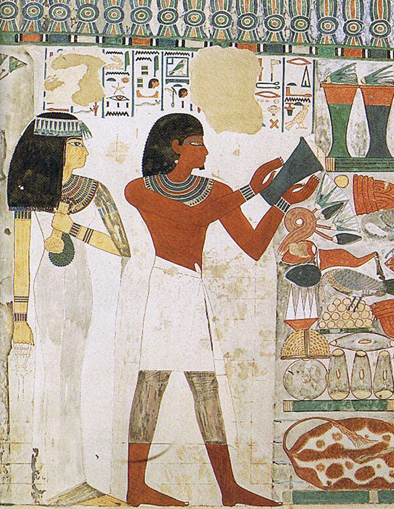
It also matters because it's like saying, "We like everything about you except for you." The African queen Cleopatra is an appealing character for a movie. She was rich and beautiful and powerful and interesting... we better cast a white lady so that she's glamorous enough, or relatable enough, or just so that we're comfortable looking at her. We'll take all the parts of her and give them to this white lady to make them better. Once when I was a freshman in high school... << tell appropriation story >>
Not many people notice when a dark skinned character is lightened but when the shoe is on the other foot it suddenly seems to matter. When the actor Michael B. Jordan was cast as the Human Torch, there was an uproar, and that's not the only time this has happened. Check out this clip from Donald Glover's stadup special Weirdo from 2012 (but watch out for F words if you're sensitive to those things):
<< weirdo clip >>
Hollywood isn't the only group who whitewashes. Please read this interesting and fantastic article about YA book covers. Furthermore, think of the magazines you see at the grocery store. Magazines with white people on the cover are for everybody, but magazines with black people on the cover are for black people because white is the default normal thing to be and anything else is specialty interest. Often when black women are cover girls, they get whitewashed in another way: the beauty whitewash. Have a look:


My friend and I were talking about an article we saw where an artist had reimagined Disney heroines with different ethnicities. Here is the artwork in question:
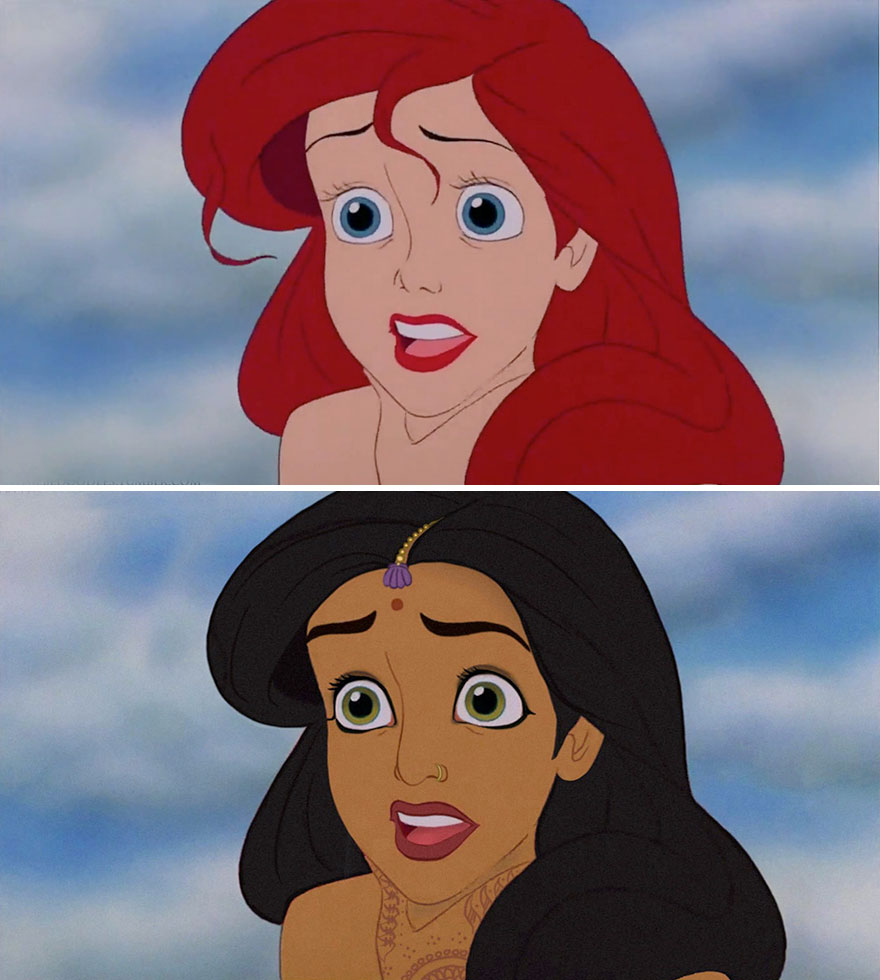
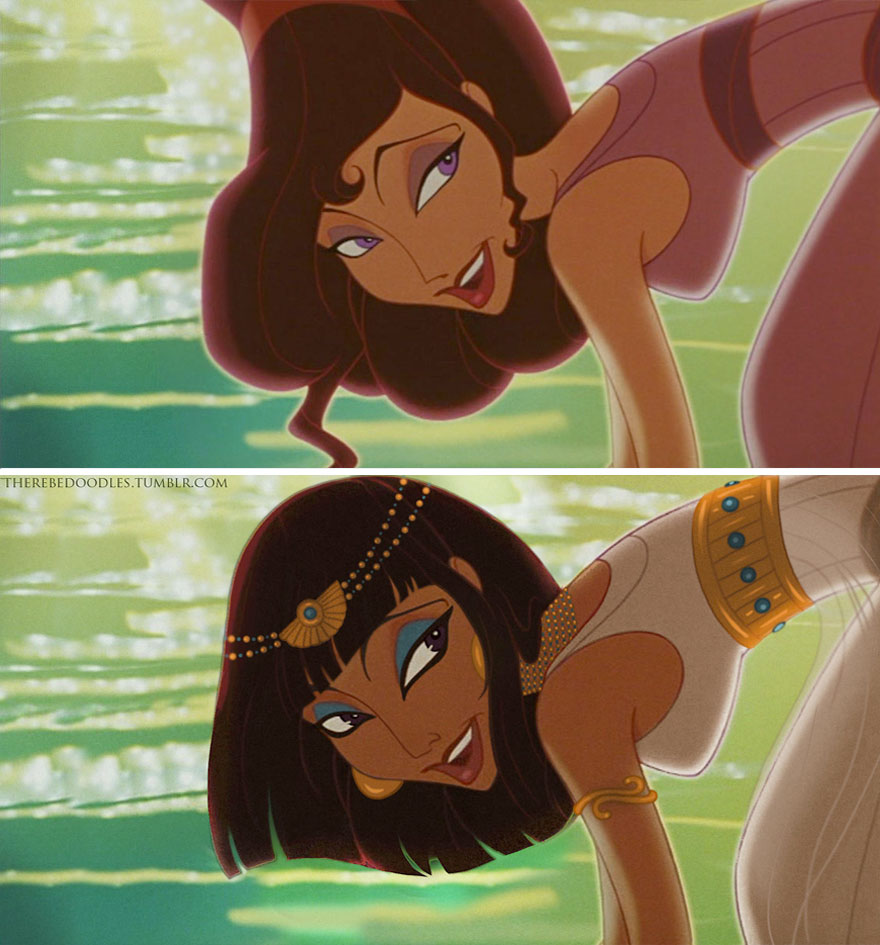
 |
| Cinderella gives her opinion. |
Honestly, it's not even the most controversial or unusual fan art on the Internet. If you glance online - you don't even have to search very hard - you can find countless examples of this type of thing. I can almost guarantee that every character you've ever cared about has been reimagined with a different ethnicity, sex, species, or age, set in the wrong time and / or place, dressed in a strange costume or no costume at all, coupled with a new love interest (possibly someone from an unconnected story universe), and any other thing your heart could hope for. And that's just the artwork, to say nothing of literary fan fictions. It's what people do. Good stories will awaken creativity. Good story telling makes people want to join in.
I maintain that these experiments are mostly done for fun, but I am going to contradict myself little a bit: I think my angry friend is partially correct.
Like her, I did notice that while all of the princesses were changed, none of them were changed to Caucasian, I simply wasn't offended by this. It's been said that no choice is made without some conscious or unconscious reason behind it. If there is a take away message from this project, perhaps it is that we could do with more variety in pop culture. Maybe the artist wanted people to start imagining things in ways we're not used to, regardless of tradition, and see what we can come up with, including but not limited to getting comfortable with seeing dark skin and non-European cultures.
My friend said there was no need to make children's characters into a political platform, but I say there absolutely is a need for this type of thinking, and using beloved children's characters is a great way to get the message out there. If people are changing the stories and characters we're used to, it's because they lack something the fans are looking for. One question that my friend failed to ask is why so many more European stories were represented than other stories, and what affect this lack of representation may have on our society.
What if you were not represented in popular fiction? By that I mean, what if almost every imagined definition of beauty, icon of heroism, or wholesome image of a boy or girl next door had nothing to do with how you look? When everyone is white, it means that people of color aren't beautiful, or heroic, or smart, or relatable. It means they're not worth mentioning at all.
I remember being a little kid in the 80s and noticing that not only was almost everyone on TV white like me, but often the good guys were blond while the bad guys had dark hair and olive (though pale) complexions. Notable exceptions resided on Sesame Street and the Cosby Show.
I don't want to sound like I had some precocious understanding of race relations. Maybe a little, but mostly I had a self-centered desire to be unique. I remember being sick of my appearance by the time I was 8 because everywhere I looked I saw blond white people. I felt like a cliche before I knew the word, which is much better than feeling like I don't exist but I still found it unpleasant.
I think that part of why I noticed this lack of diversity is because I'd been reading a comic series called ElfQuest for years. The pages were full of colorful images of beauty and adventure, and to me there was no one - no Disney princess, pop idol, or movie star - who was more perfect than Wendy Pini's Leetah. In addition to being beautiful, she was compassionate, brave, purposeful, intelligent, and very protective of her independence. I loved her. I still want to grow up to be her.

 |
| Elfquest art copyright Warp Graphics, Inc. Elfquest, its logos, characters, situations, all related indicia, and their distinctive likenesses are trademarks of Warp Graphics, Inc. All rights reserved. |
< What went here? Introduced whitewashing... >>
You can find examples of Hollywood whitewashing here and here (and lots of other places, like your TV). We expect this type of thing from the olden days of racisms gone by, but it's shocking how often it still happens today.
For instance, I recently learned that the casting call for the lead role in The Hunger Games asked for Caucasian females only, despite Katniss being described in the books as having olive skin and dark hair. While Caucasians can fit that description, so can a lot of other people. I think Jennifer Lawrence was a great choice and I'm not sad about it, but I also think this was a missed opportunity. People of color seem to be particularly under-represented in the sci-fi and fantasy genres, and who's to say there wasn't a darker skinned Katniss out there who would've been just as good or even better than Jennifer Lawrence? They didn't even look for her.
Well, most of them do. There was a big uproar when the Hunger Games movie came out and little Rue was found to be black, despite her being described as having dark brown skin in the book. And I'm not talking about, "Huh, I didn't realize Rue was black, did you? I must've overlooked that." I mean some really ugly business.
The Hunger Games is far from the only example of whitewashing from recent film making. When a live action version of the popular cartoon Avatar: The Last Airbender was cast, many fans noticed something fishy:
 |
| Source: http://colorlines.com/archives/2010/07/whitewashing_of_hollywood.html |
It's tempting to say that whitewashing doesn't matter, and I'll agree that there is the potential to get too picky. For example, it doesn't offend me if an actor is a different variety of Asian than the character he plays any more than when a Canadian actor plays an American character, but it does bother some people. Changes are often made to characters in order to accommodate the actors. They changed the character history of Mark Thackery in the movie To Sir, With Love to explain Sidney Poitier's American accent. Vivien Leigh, who played Scarlett O'Hara in Gone with the Wind, was not an American southern belle. She was British, so she had to use acting to become a southern belle. Furthermore, they used movie magic to change her eyes to green. Should skin color or ethnicity matter any more than Vivien Leigh's eyes in Gone with The Wind? And isn't acting pretending, anyway? Maybe sometimes an actor can fit a part even if his ethnicity doesn't. Why should it matter?
It matters because it's not equal. Saying that looks are secondary to a character's nature or personality is fine. However, when there's a pattern of changes to looks only going one direction it's not ok. If we were just as likely to see a black actor in a role that was written white as the other way around maybe it wouldn't matter, but that's not the world we live in. There's got to be a reason for that, and it can't be a very good one.
It also matters because it's like saying, "We like everything about you except for you." The African queen Cleopatra is an appealing character for a movie. She was rich and beautiful and powerful and interesting... we better cast a white lady so that she's glamorous enough, or relatable enough, or just so that we're comfortable looking at her. We'll take all the parts of her and give them to this white lady to make them better. Once when I was a freshman in high school... << tell appropriation story >>
Not many people notice when a dark skinned character is lightened but when the shoe is on the other foot it suddenly seems to matter. When the actor Michael B. Jordan was cast as the Human Torch, there was an uproar, and that's not the only time this has happened. Check out this clip from Donald Glover's stadup special Weirdo from 2012 (but watch out for F words if you're sensitive to those things):
<< weirdo clip >>
Hollywood isn't the only group who whitewashes. Please read this interesting and fantastic article about YA book covers. Furthermore, think of the magazines you see at the grocery store. Magazines with white people on the cover are for everybody, but magazines with black people on the cover are for black people because white is the default normal thing to be and anything else is specialty interest. Often when black women are cover girls, they get whitewashed in another way: the beauty whitewash. Have a look:
 |
| Tiana does not see the need for this. |
I was really excited when I heard that Disney was going to give us a black princess. I was worried that they'd make her fair skinned or give her European features. Obviously there's nothing wrong with having fair skin and European features (whether you're a woman of color or not), but this was going to be the first black leading lady from Disney and I wanted her to be very obviously black. I wondered how her prince would look, too. Would a black prince say, "She's nice, but we still can't mix with each other?" Would a white prince say, "We'll give you the black heroine, but a black hero is asking too much?" I was thrilled that Prince Naveen was dark skinned, but not darker than Tiana. We have a weird habit of associating fair with feminine. Ancient art from all over the world depicts couples where the female is pale and the male is darker. We still think that way. There's a book about it. If you don't believe me, do a Google image search for, "Disney kiss." Of course, as frogs it was reversed (that's a trope), but as people she is darker, and that is a victory.
I could go on and on about this, and I'll probably bring it up again in the future, but for now I'd like to end on a quote from a commenter on the This Could Have Been Frozen blog:

"Figure out why you're upset about dark people in your 'white' fairy tale and not the lions in your Hamlet."

Tuesday, October 7, 2014
Girls and Boys and Math
A couple of weird things happened in my math class this morning.
1: Several people from the class were sitting around before the professor arrived. One kid, who must be fresh out of high school, declared sagely, "You know, if she's 15 minutes late we can all leave." It struck me as so juvenile and ridiculous. First of all, the teacher wasn't late; we were all early. Second, I've heard that little nugget of wisdom several times since I was in junior high, and it's been a favorite thing to say among would-be rebels since long before my time. Third, and most importantly, THIS IS COLLEGE. It's not like there's a truant officer. If you don't feel like going to class, don't go to class. No one is going to force you. In fact, you have to pay to be here. That's kind of like going to a concert and saying, "If the band isn't on time we can all leave, you know." Yeah. We know.
2: My math teacher divides our class into small work groups, which she changes periodically. So she teaches us some new thing, we do a few practice examples and check with our groups, then she explains the correct answers and how to get them. We got new groups today, and I found myself sitting with 1 male and 4 other females. The male is about 18 and, based on class participation, I don't think he's particularly good at math. I don't think he's particularly bad, either, but whenever there's a Hermione or a Stephen Hawking in a class you tend to know who they are, and I've seen him make mistakes before like the rest of us peasants. So we were in our new groups, and we'd been given this problem:
"A rocket is stopped 20 feet from a satellite when it begins accelerating away from the satellite at a constant rate of 14 feet per second squared. The distance between the rocket and the satellite is given by the polynomial 7t2 + 20. Find the distance between the rocket and the satellite 8 seconds after the rocket started moving."
Now, I wasn't exactly sure how to solve this problem, but I was fairly certain that we needed to put that 8 with the 14 feet per second squared (as in 14(8)2, maybe), so I told the group I'd gotten that far and asked for help. The boy completely disagreed with me. He thought that the 8 seconds was extra information meant to throw us off and that we should ignore that part of the word problem. I said that the question is to determine how far the rocket gets in 8 seconds, so it's relevant, but he was so cock-sure and everyone agreed with him. I think it's because he's a boy and we all think boys are better at math than girls. By that I mean I think he was confident despite making as many mistakes as anyone else in the class because of this cultural training, and I think he was unwilling to listen to reason because of this cultural training, and I think everyone went along with him (at least partly) because of this cultural training. I wish I could remember exactly what he was saying about how to work the problem without the 8, but it didn't make sense to me so I just agreed to disagree until the teacher gave us the answer. I was on the right track; you solve it with 7(8)2 + 20, and the answer is 468 feet. This doesn't mean that he's stupid and I'm smart, it's just very interesting that everyone was willing to listen to him when he wasn't making sense and clearly didn't know what he was talking about. I believed my whole life that I'm not good at math but I'm actually doing pretty well in this class. We've all been had.
1: Several people from the class were sitting around before the professor arrived. One kid, who must be fresh out of high school, declared sagely, "You know, if she's 15 minutes late we can all leave." It struck me as so juvenile and ridiculous. First of all, the teacher wasn't late; we were all early. Second, I've heard that little nugget of wisdom several times since I was in junior high, and it's been a favorite thing to say among would-be rebels since long before my time. Third, and most importantly, THIS IS COLLEGE. It's not like there's a truant officer. If you don't feel like going to class, don't go to class. No one is going to force you. In fact, you have to pay to be here. That's kind of like going to a concert and saying, "If the band isn't on time we can all leave, you know." Yeah. We know.
2: My math teacher divides our class into small work groups, which she changes periodically. So she teaches us some new thing, we do a few practice examples and check with our groups, then she explains the correct answers and how to get them. We got new groups today, and I found myself sitting with 1 male and 4 other females. The male is about 18 and, based on class participation, I don't think he's particularly good at math. I don't think he's particularly bad, either, but whenever there's a Hermione or a Stephen Hawking in a class you tend to know who they are, and I've seen him make mistakes before like the rest of us peasants. So we were in our new groups, and we'd been given this problem:
"A rocket is stopped 20 feet from a satellite when it begins accelerating away from the satellite at a constant rate of 14 feet per second squared. The distance between the rocket and the satellite is given by the polynomial 7t2 + 20. Find the distance between the rocket and the satellite 8 seconds after the rocket started moving."
Now, I wasn't exactly sure how to solve this problem, but I was fairly certain that we needed to put that 8 with the 14 feet per second squared (as in 14(8)2, maybe), so I told the group I'd gotten that far and asked for help. The boy completely disagreed with me. He thought that the 8 seconds was extra information meant to throw us off and that we should ignore that part of the word problem. I said that the question is to determine how far the rocket gets in 8 seconds, so it's relevant, but he was so cock-sure and everyone agreed with him. I think it's because he's a boy and we all think boys are better at math than girls. By that I mean I think he was confident despite making as many mistakes as anyone else in the class because of this cultural training, and I think he was unwilling to listen to reason because of this cultural training, and I think everyone went along with him (at least partly) because of this cultural training. I wish I could remember exactly what he was saying about how to work the problem without the 8, but it didn't make sense to me so I just agreed to disagree until the teacher gave us the answer. I was on the right track; you solve it with 7(8)2 + 20, and the answer is 468 feet. This doesn't mean that he's stupid and I'm smart, it's just very interesting that everyone was willing to listen to him when he wasn't making sense and clearly didn't know what he was talking about. I believed my whole life that I'm not good at math but I'm actually doing pretty well in this class. We've all been had.
Wednesday, September 17, 2014
tHis iS NOt hoW i wAntEd MaRGo
I just saw the news, and I'm not thrilled with the casting choice for Margo Roth Spiegelman in the upcoming Paper Towns movie.
Paper Towns was the first book by John Green that I ever read. I had recently started following his vlog, and when I realized he'd published a few YA novels I was interested. When I checked out Paper Towns from the library my hopes were neither high nor low; I didn't know what to expect.
What I got was a novel with a unique storyline, well structured themes, a compelling mystery, and fully realized characters. Not since reading about the folks of Maycomb County had I felt so emotionally connected to a cast of fictional characters. Their friendships and hopes mattered to me. It was the first book in several years that I stayed up all night to finish in one sitting. I loved it. I still love it.
In the book, enigmatic Margo Roth Spiegelman is the it girl of her high school. She is smart, interesting, adventurous, and sexy. And she's kind of fat.
The word "fat" can mean a lot of things in our society. There are gorgeous plus sized models who have that golden ratio in larger proportions, and there are those whose ratios are somewhat less than golden through their flabby mid sections, and there are people who have bodies that can't support their own weight. A pregnant woman is fat. If you can't make out someone's bones through their skin it's usually because of fat. The number on a pair of jeans rather than the belly that does or does not hang over them determines fatness. Even a thin person with more visible cellulite than muscle tone is called "skinny fat." That one word is used to encompass a myriad different ways we judge each other's appearance. We can't seem to specifically define fat but we know we don't want to be it. Usually fat means unattractive, but not in every case and certainly not in the case of Margo Roth Spiegelman.
The book describes her as having a curvaceous body type, complete with breasts and hips, thighs and butt. She's sensitive to comments about her size, even though she can run, climb, jump, talk fast, and kiss a boy, all without getting winded. Personally, I pictured Margo along the lines of a plus size model: a fit but thick hourglass body type with round cheeks and only one chin. The person they chose to play her in the movie is lovely, but she is not thick. She is not fat.
I'm not here to skinny shame. I think healthy is more attractive than not, but I don't think that one type of healthy body is more attractive than another type of healthy body. I don't think that Pink is any more or less attractive than Lauren Ash or Kate Moss, for example, despite their different body types. Tall, short, pudgy, toned, delicate, brawny, hourglass, lanky, willowy, thick, round, chubby, dark or pale, freckled skin or clear, straight or gap-toothed, big or small nosed, an oval face or highly defined cheekbones, whether or not walking causes a jiggle of flesh, there are only about a million different ways to be attractive on this Earth. Unfortunately, one type is far more represented in media than the rest, and I don't have to specify which one that is.
Her body is not the most important thing about her character, but it does factor into her character. It affected how she thought about herself and interacted with others. Margo, like all humans and fully realized characters, is a lot of things. Her body is only one part of her, but it's a part I really like. Margo having the body type she has in the book is a fresh breeze in pop culture. Hollywood has (unsurprisingly) blown a chance to represent another side of beauty, opting instead for a fashion model.
The funny thing is that Margo doesn't have a lot of screen time, if the movie follows the book. Her friend, Lacey, who is really thin, may be more present. There was no need to hack at Margo when Lacey is there to represent the type beauty we're all used to.
The other funny thing is that the point of Margo [spoiler alert] is that you don't get to decide who or what someone else is. Who you think they are usually isn't who they actually are. Who they are to you isn't who they are to themselves. In the beginning, we see Margo as Q's manic pixie dream girl, and she does have some of those qualities, but we come to find out that she is a whole person and she's not perfect and she's not a dream. She's smart but she's got some dumb ideas. She's had a lot of experiences but she isn't all that mature. She's got a pretty good life at school, but not at home. Some might say that she's completely gorgeous but she's a little fat. And most importantly, she does not exist solely to make our hero learn things about himself and become a better person. She does do that, but so do his other friends. She was misjudged and put on a pedestal for years, and she did all she could to break away from that. Movie producers choosing someone with a thinner body type seems a lot like the kids at her school romanticizing her life for her. It's wrong. I don't like it.
I'm sure Cara Delevingne will do fine as Margo. I know John Green is very excited about her, and he "knows" Margo better than any of us. It's not going to ruin the movie or anything, it's just not what I wanted. This is what Hollywood does, though. They did it to Cassidy in The Spectacular Now; Brie Larson is pretty, but she is not the, "gloriously fat," kind of pretty that Sutter describes in the book. Now they're doing it to Margo Roth Spiegelman. This makes me really nervous for the Eleanor & Park movie that's also in the works. If Margo's body type was a somewhat minor detail, Eleanor's is a major plot point. Please, please, please, give me a thick-bodied, freckle-faced Eleanor with unruly red curls.
Paper Towns was the first book by John Green that I ever read. I had recently started following his vlog, and when I realized he'd published a few YA novels I was interested. When I checked out Paper Towns from the library my hopes were neither high nor low; I didn't know what to expect.
What I got was a novel with a unique storyline, well structured themes, a compelling mystery, and fully realized characters. Not since reading about the folks of Maycomb County had I felt so emotionally connected to a cast of fictional characters. Their friendships and hopes mattered to me. It was the first book in several years that I stayed up all night to finish in one sitting. I loved it. I still love it.
In the book, enigmatic Margo Roth Spiegelman is the it girl of her high school. She is smart, interesting, adventurous, and sexy. And she's kind of fat.
The word "fat" can mean a lot of things in our society. There are gorgeous plus sized models who have that golden ratio in larger proportions, and there are those whose ratios are somewhat less than golden through their flabby mid sections, and there are people who have bodies that can't support their own weight. A pregnant woman is fat. If you can't make out someone's bones through their skin it's usually because of fat. The number on a pair of jeans rather than the belly that does or does not hang over them determines fatness. Even a thin person with more visible cellulite than muscle tone is called "skinny fat." That one word is used to encompass a myriad different ways we judge each other's appearance. We can't seem to specifically define fat but we know we don't want to be it. Usually fat means unattractive, but not in every case and certainly not in the case of Margo Roth Spiegelman.
The book describes her as having a curvaceous body type, complete with breasts and hips, thighs and butt. She's sensitive to comments about her size, even though she can run, climb, jump, talk fast, and kiss a boy, all without getting winded. Personally, I pictured Margo along the lines of a plus size model: a fit but thick hourglass body type with round cheeks and only one chin. The person they chose to play her in the movie is lovely, but she is not thick. She is not fat.
I'm not here to skinny shame. I think healthy is more attractive than not, but I don't think that one type of healthy body is more attractive than another type of healthy body. I don't think that Pink is any more or less attractive than Lauren Ash or Kate Moss, for example, despite their different body types. Tall, short, pudgy, toned, delicate, brawny, hourglass, lanky, willowy, thick, round, chubby, dark or pale, freckled skin or clear, straight or gap-toothed, big or small nosed, an oval face or highly defined cheekbones, whether or not walking causes a jiggle of flesh, there are only about a million different ways to be attractive on this Earth. Unfortunately, one type is far more represented in media than the rest, and I don't have to specify which one that is.
Her body is not the most important thing about her character, but it does factor into her character. It affected how she thought about herself and interacted with others. Margo, like all humans and fully realized characters, is a lot of things. Her body is only one part of her, but it's a part I really like. Margo having the body type she has in the book is a fresh breeze in pop culture. Hollywood has (unsurprisingly) blown a chance to represent another side of beauty, opting instead for a fashion model.
The funny thing is that Margo doesn't have a lot of screen time, if the movie follows the book. Her friend, Lacey, who is really thin, may be more present. There was no need to hack at Margo when Lacey is there to represent the type beauty we're all used to.
The other funny thing is that the point of Margo [spoiler alert] is that you don't get to decide who or what someone else is. Who you think they are usually isn't who they actually are. Who they are to you isn't who they are to themselves. In the beginning, we see Margo as Q's manic pixie dream girl, and she does have some of those qualities, but we come to find out that she is a whole person and she's not perfect and she's not a dream. She's smart but she's got some dumb ideas. She's had a lot of experiences but she isn't all that mature. She's got a pretty good life at school, but not at home. Some might say that she's completely gorgeous but she's a little fat. And most importantly, she does not exist solely to make our hero learn things about himself and become a better person. She does do that, but so do his other friends. She was misjudged and put on a pedestal for years, and she did all she could to break away from that. Movie producers choosing someone with a thinner body type seems a lot like the kids at her school romanticizing her life for her. It's wrong. I don't like it.
I'm sure Cara Delevingne will do fine as Margo. I know John Green is very excited about her, and he "knows" Margo better than any of us. It's not going to ruin the movie or anything, it's just not what I wanted. This is what Hollywood does, though. They did it to Cassidy in The Spectacular Now; Brie Larson is pretty, but she is not the, "gloriously fat," kind of pretty that Sutter describes in the book. Now they're doing it to Margo Roth Spiegelman. This makes me really nervous for the Eleanor & Park movie that's also in the works. If Margo's body type was a somewhat minor detail, Eleanor's is a major plot point. Please, please, please, give me a thick-bodied, freckle-faced Eleanor with unruly red curls.
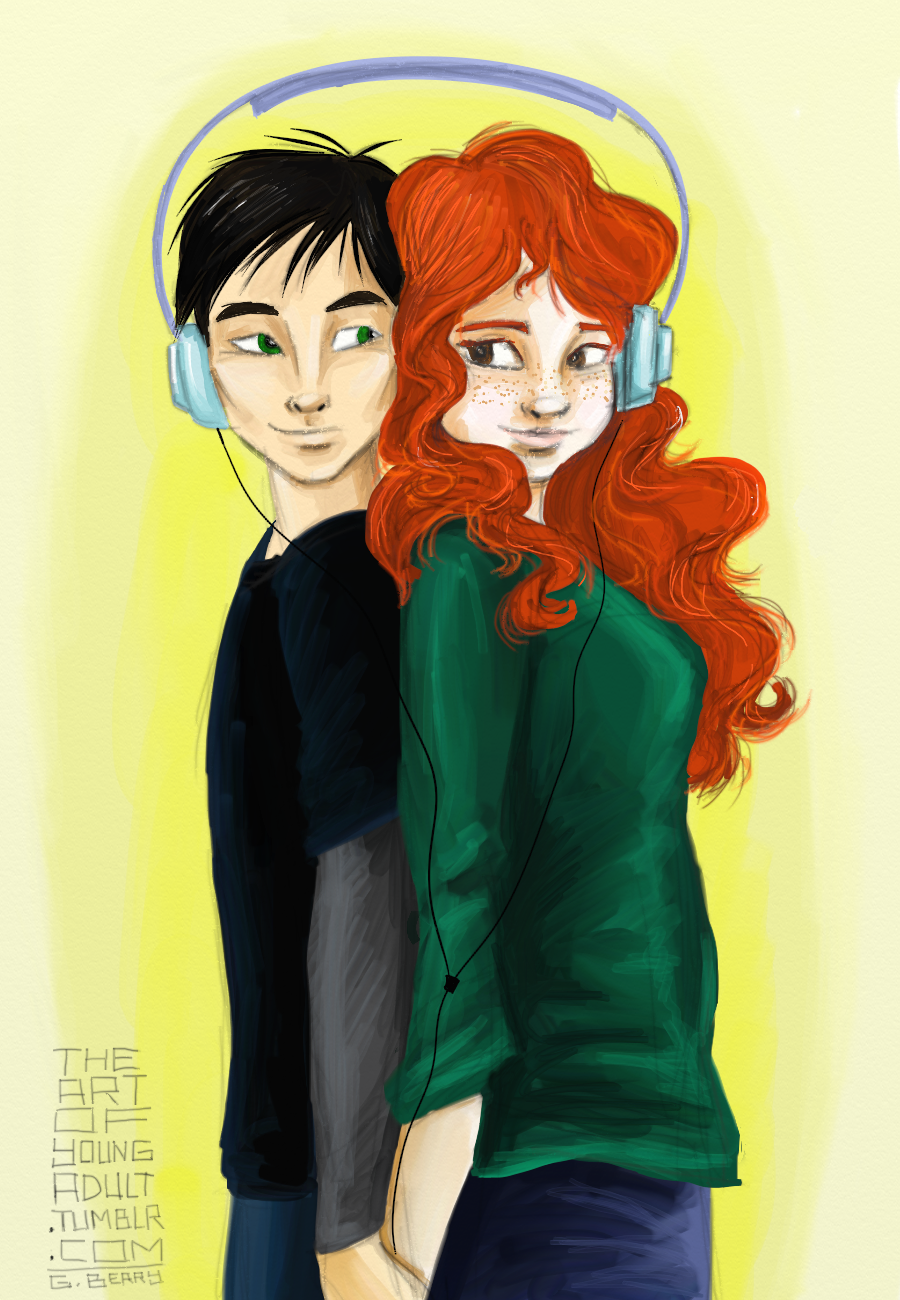 |
| http://theartofyoungadult.tumblr.com/search/eleanor+and+park |
Thursday, September 11, 2014
Part 1 of a 2 Part Rant
I had an irritating conversation with a friend recently about race which got me thinking, which got me researching, which got me fuming. More on that later. First, read this:

 |
| Image taken from an unfortunate article about a Tumblr post. |
Ok. Let's go.
Perhaps it's true that many of the fairy tales Disney has chosen to make into movies originated in Europe, where the white folks come from. There’s debate about Frozen, but for argument’s sake we can lump it in with Beauty and the Beast, Cinderella, Brave (which is set in Scotland, not Ireland, by the way) and so on. That may justify the number of white princesses, but it also begs the question why so many European stories have been chosen over all the other stories in the world.
But even if these stories did originate in Europe, do we really
think that Disney is overly concerned with historical or canonical accuracy? Is that the argument this person is making? Anachronisms abound in their films, and not just for comedic
effect. Many of the movies are difficult to date or pinpoint on a map because the costumes
are all over the place. That’s ok, they’re not trying to make documentaries;
they’re making pretty, fun, silly, romantic stories. Accuracy doesn't really matter. Anyway, some of the Disney kingdoms are admittedly fictional and so don't have to conform to any specific culture or time. The people in these fictional kingdoms must remain Caucasian, though, obviously.
Here's the thing, though: They didn't all originate in Europe. There are Cinderella stories from Egypt and China that predate the one we're used to from France. I doubt that's the only story with several possible origins, not all of them European. Where did the story of the Frog Prince
come from? I don’t know, but I’m certain it predates the New Orleans jazz era.
That setting makes for a pretty great story, though, so I guess artistic changes like that are ok.
Look at Robin Hood - all of the characters are humanized animals. That’s not how
the legend of the man in Lincoln green was told for centuries, but
it made for a fantastic cartoon. A classic. One of my favorites. They had to make changes to Victor Hugo's The Hunchback of Notre Dame because with the rape and bestiality it's just not suitable for children. Similarly, the Greek myths of Hercules and the gods of Olympus are too violent and sexual for that G rating studios tend to shoot for with kiddie flicks, so of course that story had to be adjusted. They churched up Hamlet so that The Lion King could be rated G as well. Furthermore, they set it in Africa rather than Denmark (a country that's just full of white people) and used talking animals. In Rudyard Kipling's The Jungle Books, Baloo is a stern teacher rather than a lazy scamp, Shere Khan's name is Lungri, which means, "The Lame One," because he has a lame foot, and Kaa helps Mowgli and doesn't try to eat him. There is no King Louis in the book; he's a Disney invention. Speaking of Disney inventions, Madam Mim from The Sword in the Stone does not appear in T. H. White's novel The Once and Future King, which is the basis for that movie. If you close one eye and squint the other, you might be able to see her as a very loose interpretation of Morgan le Fay, but it's a stretch. There are other differences between that book and the movie, like that Kay was just slightly older than the Wart, and although he was a bit of a spoiled bully type the boys were pretty close friends all their lives. As for Merlin, he never turned the Wart into an animal without teaching him an important lesson about the world and politics. He was subtly training the boy to become a new kind of king without him realizing it, and that doesn't really come across in the movie. Anyone who read The Chronicles of Prydain by Lloyd Alexander cringes at the liberties Disney took with The Black Cauldron. In the original 1001 Arabian Nights, Aladdin was Chinese. Perhaps in the time and place it was written, not enough was known about Chinese culture to make that feel accurate, so again, a change is ok. In the imagination of Lewis Caroll, who wrote Alice in Wonderland, the heroine had dark hair like his granddaughter rather than blond. Disney's Pocahontas might be the most inaccurate of all. It pretends to be based on historical events rather than novels and legends, but nearly every detail is incorrect. They aged the heroine, to start with. They also made her more beautiful, at least according to beauty standards of the western world in 1995. I’ve never seen a traditional Native American dress with a sweetheart neckline. They did this in order to sexualize I mean romanticize her. Her beautiful necklace is made of semi-precious stones found in the southwest even though her story takes place in the east. Her love interest was never a love interest, and her heroic act of saving him from her father is widely believed to be a lie John Smith told.
So if all of
these changes are ok, how can anyone insist that any of the characters have to be anything?
Furthermore, I think the Tumblr user and I have different opinions on what constitutes "plenty" of non-white ladies. Off the top of my head, I can think of 4 popular Disney heroines who aren't white (Pocahontas, Mulan, Tiana, Jasmine) and 8 who are (Snow White, Cinderella, Sleeping Beauty, Ariel, Belle, Merida, the Frozen sisters). I found a list of female Disney characters here. This list is not just for main characters; it seems to include every female to ever appear in a Disney story, some of them pretty obscure. I got 5 pages into the 62 page list and counted 49 white characters, 13 non-white characters, 4 who were racially ambiguous (though none of these were dark skinned by any means), and 18 non-humans. If you feel this research is inadequate I understand, and you're of course free to continue it on your own, but I'm going to go ahead and say that well over half of the female Disney characters are white (58.3% if you count the non-humans as technically not white, 74.2% if you don't count them at all because they're not human). Most of these non-white characters are relatively new. You can believe, like the Tumblr user, that they weren't created in response to social changes and fans clambering for representation, but I'll continue to believe the that they were. That's alright. It's good to change.
Finally, I wish to contest this person's closing argument, all proudly highlighted, that Disney does not whitewash. First of all, the first responder upon whom the ranter retched venom didn't say that the 4 heroines in the picture had been whitewashed; he/she just said they're all white, which they are. There are POCs (princesses of color) who could've been used for the picture but weren't. That's ok. We already established that the odds weren't in their favor, and princesses are great in any shade, including the light ones. Anyway, I think the point was to use Pixar/Disney princesses, not just Disney. However, just because THESE ladies weren't whitewashed doesn't mean Disney doesn't whitewash. But as mentioned above, there is some controversy over the Frozen characters being pale rather than looking like the Sámi people of Scandinavia. The changes made to Pocahontas are a form of whitewashing because they removed her cultural identity. Many people feel that when the heroines who were chosen to be "Official Disney Princesses," got glamorized for that promotion, they took on a whiter, more western appearance in a process known as whitewashing. It happens. Hollywood whitewashes, and Disney is a part of Hollywood. We live in a culture that still favors white people (more on that later).
I'm not saying that the princesses we're used to seeing as white should've been given another ethnicity, and I'm not saying that Disney should never make another white princess. I'm just saying it's silly to pretend that white isn't the go-to first choice for heroes in fiction when, clearly, it still is. Furthermore, railing against people who ask for more diversity in pop culture makes you look like an overly-sensitive, frightened of change bully.
I'm not saying that the princesses we're used to seeing as white should've been given another ethnicity, and I'm not saying that Disney should never make another white princess. I'm just saying it's silly to pretend that white isn't the go-to first choice for heroes in fiction when, clearly, it still is. Furthermore, railing against people who ask for more diversity in pop culture makes you look like an overly-sensitive, frightened of change bully.
Thursday, September 4, 2014
Changes Afoot
I think I want a different name for this blog, but I have a few readers and I don't want to lose you. I'll make it a gradual change when I think of a new name. If you have any suggestions, let me know in comments.
Tuesday, August 19, 2014
These Grapes are Tart, or How I Lost My Horrible Job
I'm realizing now that I never actually posted about losing my job. It happened back in November of 2013. I had taken a vacation and a short time after I came back I got sick and ended up missing more days than was allowed. On top of that, I had recently told my new supervisor some things he didn't want to hear:
Him: Management wants the agents to be more self-reliant and stop asking the supervisors for permission before they do every little thing.
Me: That's great! That's how it used to be, years ago. One way to accomplish this change would be for supervisors to back the agents up when they do go out on a limb for their customers. It'll be impossible to foster confidence in the agents without this.
Him: ... Well, WE'RE not going to change anything, only YOU GUYS have to change...
And
Him: I don't understand why agents are so scared of these coaching meetings. It's just an opportunity for me to tell them how they can improve. It's not like they're in trouble or anything.
Me: That's so true. <Unspoken: It SHOULD be true, but we all know it's not true when you say it, you sneaky bastard. >
- A few minutes later his boss walked by and asked to see him after our meeting -
Him: Hoo! That freaks me out a little bit! I don't know what he wants.
Me: Don't worry, it's only a coaching.
- I realize that's a bit cheeky. In my defense, I said it playfully rather than scathingly, and with the hope he'd gain the empathy he clearly lacks for his subordinates. My previous supervisors would've laughed and joked back, and 100% would've understood the point. My new supervisor, however, did not react that way. He narrowed his eyes and replied haughtily -
Him: Well, the difference is, I could get fired at any moment if they choose!
Me: <Awkward pause. Unspoken: How is that different from anyone else? Blink.> Ah. That would be really nerve-wracking.
I had been a customer service agent for that company for 6 years. I wasn't perfect, but I was damn good at my job. Previous supervisors said so, co-workers sought my advice, customers exclaimed that I was so kind and patient, and that no one was able to help them understand things the way I could. Sure, there's always room for improvement (it's hard to give your all to a company you know doesn't care about you anymore), but I was still far from bad at my job. He didn't seem to agree. He found fault in my work any chance he could. I didn't like being told I had no empathy by someone who can't empathize with his own employees, especially when my customers told me the exact opposite. I'm not really sure someone who thinks Jennifer Lawrence is a bad actress because she blinks (and his dog can blink) is qualified to judge empathy, or anything else for that matter.
I had grown to truly hate that job anyway. I'm sure this whole post sounds like a bunch of sour grapes and maybe it is. Whatever. I was shocked when I was let go. I was hurt, I was offended, I was scared, but I was not sad. Not one bit. Never once have I missed that place or those tasks. I love that my phone doesn't ring, and that I don't have to smile through greedy manipulations and petulant complaints. I love that that place has no more power over me.
I hope I never have to work in customer service again.
Him: Management wants the agents to be more self-reliant and stop asking the supervisors for permission before they do every little thing.
Me: That's great! That's how it used to be, years ago. One way to accomplish this change would be for supervisors to back the agents up when they do go out on a limb for their customers. It'll be impossible to foster confidence in the agents without this.
Him: ... Well, WE'RE not going to change anything, only YOU GUYS have to change...
And
Him: I don't understand why agents are so scared of these coaching meetings. It's just an opportunity for me to tell them how they can improve. It's not like they're in trouble or anything.
Me: That's so true. <Unspoken: It SHOULD be true, but we all know it's not true when you say it, you sneaky bastard. >
- A few minutes later his boss walked by and asked to see him after our meeting -
Him: Hoo! That freaks me out a little bit! I don't know what he wants.
Me: Don't worry, it's only a coaching.
- I realize that's a bit cheeky. In my defense, I said it playfully rather than scathingly, and with the hope he'd gain the empathy he clearly lacks for his subordinates. My previous supervisors would've laughed and joked back, and 100% would've understood the point. My new supervisor, however, did not react that way. He narrowed his eyes and replied haughtily -
Him: Well, the difference is, I could get fired at any moment if they choose!
Me: <Awkward pause. Unspoken: How is that different from anyone else? Blink.> Ah. That would be really nerve-wracking.
I had been a customer service agent for that company for 6 years. I wasn't perfect, but I was damn good at my job. Previous supervisors said so, co-workers sought my advice, customers exclaimed that I was so kind and patient, and that no one was able to help them understand things the way I could. Sure, there's always room for improvement (it's hard to give your all to a company you know doesn't care about you anymore), but I was still far from bad at my job. He didn't seem to agree. He found fault in my work any chance he could. I didn't like being told I had no empathy by someone who can't empathize with his own employees, especially when my customers told me the exact opposite. I'm not really sure someone who thinks Jennifer Lawrence is a bad actress because she blinks (and his dog can blink) is qualified to judge empathy, or anything else for that matter.
I had grown to truly hate that job anyway. I'm sure this whole post sounds like a bunch of sour grapes and maybe it is. Whatever. I was shocked when I was let go. I was hurt, I was offended, I was scared, but I was not sad. Not one bit. Never once have I missed that place or those tasks. I love that my phone doesn't ring, and that I don't have to smile through greedy manipulations and petulant complaints. I love that that place has no more power over me.
I hope I never have to work in customer service again.
Monday, August 18, 2014
Old Crushes Die Hard
This guy I used to have a crush on in junior high and high school is newly single.
When I saw that on Facebook I perked up for half a second. As if we lived anywhere near each other, or he was ever attracted to me, or either of us are still who we were 15 years ago, or this meant anything at all to my life.
It was the strangest thing, this brief flash of emotion that meant, "I'll be sure to turn on the charm next period when I see him. Maybe I can try to sit by him at the next pep rally."
I don't still have a crush on this guy, but my brain remembers when I did and is ready to jump right back into that mode.
When I saw that on Facebook I perked up for half a second. As if we lived anywhere near each other, or he was ever attracted to me, or either of us are still who we were 15 years ago, or this meant anything at all to my life.
It was the strangest thing, this brief flash of emotion that meant, "I'll be sure to turn on the charm next period when I see him. Maybe I can try to sit by him at the next pep rally."
I don't still have a crush on this guy, but my brain remembers when I did and is ready to jump right back into that mode.
Sunday, August 10, 2014
Oops
Hey, remember when I used to update my blog? Gah. I'll get back to that soon. In the mean time, here's a quick update on my life.
Since I lost my job in November I've been temping in a couple of places. Most recently I was working at a laundry soap factory. It was a conveluted setup that I don't feel like explaining, but my job was to make sure other temps came to work. If they didn't I had to call the other temp agencies who sent them (Why wasn't my temp agency filling the positions? Because it needs to be complicated). Anyway, the factory's company culture / atmosphere was horrible. The managers there acted like I was there to annoy them when I came around to check and make sure they got all their people, rather than being there to do their job for them. They looked at me like I was something gross on the bottom of their shoe, they refused to communicate their needs but expected us to accomodate them anyway, and they wanted a ton of extra services that they didn't want to pay for. If someone didn't show up for work they acted like I was hiding that person in my desk, or no, like I had placed them in my desk and forgotten them because I'm a moron. Oh, and their HR kept forgetting to pay me. Anyway, it was a shitty job and I quit it. So I'm unemployed again. I want to find another job but I'm scared. Everything feels like a trap.


Anyway, the good news is I'm going back to school! I start on August 25. I'll be majoring in English with an emphasis in creative writing. This is what I've always wanted to do. This is what I love doing. I know it's risky, but doing things you don't love for a pay check is deadly.
Since I lost my job in November I've been temping in a couple of places. Most recently I was working at a laundry soap factory. It was a conveluted setup that I don't feel like explaining, but my job was to make sure other temps came to work. If they didn't I had to call the other temp agencies who sent them (Why wasn't my temp agency filling the positions? Because it needs to be complicated). Anyway, the factory's company culture / atmosphere was horrible. The managers there acted like I was there to annoy them when I came around to check and make sure they got all their people, rather than being there to do their job for them. They looked at me like I was something gross on the bottom of their shoe, they refused to communicate their needs but expected us to accomodate them anyway, and they wanted a ton of extra services that they didn't want to pay for. If someone didn't show up for work they acted like I was hiding that person in my desk, or no, like I had placed them in my desk and forgotten them because I'm a moron. Oh, and their HR kept forgetting to pay me. Anyway, it was a shitty job and I quit it. So I'm unemployed again. I want to find another job but I'm scared. Everything feels like a trap.
I know that no job is perfect. I'm not looking for a perfect job. I just don't want to be miserable at work anymore.
Saturday, April 12, 2014
Quizzes Are Dumb
I just took this quiz to find out how privileged I am: http://www.buzzfeed.com/regajha/how-privileged-are-you.
The first time I took it, I got 49 out of 100 points of privilege and was told, "You’re not privileged at all. You grew up with an intersectional, complicated identity, and life never let you forget it. You’ve had your fair share of struggles, and you’ve worked hard to overcome them. We do not live in an ideal world and you had to learn that the hard way. It is not your responsibility to educate those with more advantages than you, but if you decide you want to, go ahead and send them this quiz. Hopefully it will help."
That's interesting and somewhat validating, but some of the questions were hard to answer. For example, I'm pretty sure I have been called a racial slur (both in jest and in earnest) but it was so long ago I can hardly remember and it didn't affect my self-esteem in any way. Name calling is always hurtful, but the weight of the slurs that apply to me simply doesn't compare to the weight of slurs for other races. That may not be fair but not much about the world is, and, "My racial slur doesn't receive or warrant as much indignation as yours," is really... I don't know; what's less significant than a first world problem? And if I have to think about it this much, does it even count? Have I really been racially slurred? The letter-of-the-law answer is yes. The spirit-of-the-law answer, maybe not.
The quiz also asks whether or not strangers have ever wanted to touch my hair. This is likely in reference to oblivious white people invading the personal space of black people and making them feel judged as unusual and put on display because of their hair's style or texture. Well, as a kid I had very long, straight, blond hair. The other girls in my elementary school were always touching my hair, asking to braid it or just play with it, even girls I didn't know. I remember once sitting on the risers in music class and my hair was being pulled in 4 different directions by inept would-be stylists. So, yes, strangers have asked to touch my hair. It certainly singled me out as different but it didn't make me feel uncomfortable. Unlike my sister and niece (also white) who can't stand when strangers reach for their curls, I love when people play with my hair. It makes my eyes roll back into my head and I drool a little. It's embarrassing to think of now, but since I was never offended when strangers asked it of me I know there were times when I was that obnoxious white girl who asked to touch a black girl's hair. This was when I was young and didn't have boundaries or any social context.
"I have never lied about my sexuality," is another tough one. I've never had to hide the fact that I'm a girl who likes boys, but the word "sexuality" implies more than just sexual preference, and I can be pretty reserved about all that stuff, especially with authority figures. I never HAD to lie, but I certainly DID lie about what I was up to from time to time. Likewise, I answered that I have been called derogatory slurs for a homosexual, but since I am not a homosexual that is more of an insult to homosexuals than to me. "Don't be gay, just jump in already!" said my lesbian friend at the pool one day. On the flip side, I have been singled out as odd for being heterosexual, "I don't get how anyone in this day and age can be completely straight," and you should hear the comments when someone finds out you're a sexually abstinent adult!
But back to this silly quiz; I don't have any student loans because I never took any out and haven't graduated college, not because I could afford to go to school without them. Also, sometimes people go to bed hungry by choice, not necessity.
Long story short, I took the quiz a second time and got 51 out of 100 points of privilege. Only 2 points of difference, but now the quiz maker tells me, "You’re quite privileged. You’ve had a few struggles, but overall your life has been far easier than most. This is not a bad thing, nor is it something to be ashamed of. But you should be aware of your advantages and work to help others who don’t have them. Thank you for checking your privilege."
A 2 point change takes me from, "You’re not privileged at all," to "You’re quite privileged." The mathematical difference between my "fair share" of struggles and "a few" struggles in an otherwise easy life is, apparently, 2. Out of 100. Because there are only 100 ways someone can be privileged or disadvantaged.
This is not science. It was interesting, though, and I do think that it's got some good things going for it. It is definitely important to be aware of what you have and of what others don't have. I think it does more good than harm, even if it is oversimplified and a bit high-handed.
You should take the quiz and let me know what you get and what you think about it. Were there only 2 possible results or were there more? Comments are welcome.
The first time I took it, I got 49 out of 100 points of privilege and was told, "You’re not privileged at all. You grew up with an intersectional, complicated identity, and life never let you forget it. You’ve had your fair share of struggles, and you’ve worked hard to overcome them. We do not live in an ideal world and you had to learn that the hard way. It is not your responsibility to educate those with more advantages than you, but if you decide you want to, go ahead and send them this quiz. Hopefully it will help."
That's interesting and somewhat validating, but some of the questions were hard to answer. For example, I'm pretty sure I have been called a racial slur (both in jest and in earnest) but it was so long ago I can hardly remember and it didn't affect my self-esteem in any way. Name calling is always hurtful, but the weight of the slurs that apply to me simply doesn't compare to the weight of slurs for other races. That may not be fair but not much about the world is, and, "My racial slur doesn't receive or warrant as much indignation as yours," is really... I don't know; what's less significant than a first world problem? And if I have to think about it this much, does it even count? Have I really been racially slurred? The letter-of-the-law answer is yes. The spirit-of-the-law answer, maybe not.
The quiz also asks whether or not strangers have ever wanted to touch my hair. This is likely in reference to oblivious white people invading the personal space of black people and making them feel judged as unusual and put on display because of their hair's style or texture. Well, as a kid I had very long, straight, blond hair. The other girls in my elementary school were always touching my hair, asking to braid it or just play with it, even girls I didn't know. I remember once sitting on the risers in music class and my hair was being pulled in 4 different directions by inept would-be stylists. So, yes, strangers have asked to touch my hair. It certainly singled me out as different but it didn't make me feel uncomfortable. Unlike my sister and niece (also white) who can't stand when strangers reach for their curls, I love when people play with my hair. It makes my eyes roll back into my head and I drool a little. It's embarrassing to think of now, but since I was never offended when strangers asked it of me I know there were times when I was that obnoxious white girl who asked to touch a black girl's hair. This was when I was young and didn't have boundaries or any social context.
"I have never lied about my sexuality," is another tough one. I've never had to hide the fact that I'm a girl who likes boys, but the word "sexuality" implies more than just sexual preference, and I can be pretty reserved about all that stuff, especially with authority figures. I never HAD to lie, but I certainly DID lie about what I was up to from time to time. Likewise, I answered that I have been called derogatory slurs for a homosexual, but since I am not a homosexual that is more of an insult to homosexuals than to me. "Don't be gay, just jump in already!" said my lesbian friend at the pool one day. On the flip side, I have been singled out as odd for being heterosexual, "I don't get how anyone in this day and age can be completely straight," and you should hear the comments when someone finds out you're a sexually abstinent adult!
But back to this silly quiz; I don't have any student loans because I never took any out and haven't graduated college, not because I could afford to go to school without them. Also, sometimes people go to bed hungry by choice, not necessity.
Long story short, I took the quiz a second time and got 51 out of 100 points of privilege. Only 2 points of difference, but now the quiz maker tells me, "You’re quite privileged. You’ve had a few struggles, but overall your life has been far easier than most. This is not a bad thing, nor is it something to be ashamed of. But you should be aware of your advantages and work to help others who don’t have them. Thank you for checking your privilege."
A 2 point change takes me from, "You’re not privileged at all," to "You’re quite privileged." The mathematical difference between my "fair share" of struggles and "a few" struggles in an otherwise easy life is, apparently, 2. Out of 100. Because there are only 100 ways someone can be privileged or disadvantaged.
This is not science. It was interesting, though, and I do think that it's got some good things going for it. It is definitely important to be aware of what you have and of what others don't have. I think it does more good than harm, even if it is oversimplified and a bit high-handed.
You should take the quiz and let me know what you get and what you think about it. Were there only 2 possible results or were there more? Comments are welcome.
I Read It.
It wasn't easy, but I read that old journal from 1995. It was delightfully wretched. Highlights include sincere use of the word "mackin'" and the phrase, "Really cool Dr. Seuss hats." Both were in an entry about a trip to Six Flags Astroworld with the school band. Awesome.
It's funny how I talked about people and things as if they'd matter forever. I'd use only their first names with no explanation or context for who they are. I sprained my memory on someone who was in a play with me for a few weeks one summer. We never got close and I never saw her again, but she was older than me and therefore very cool. Good thing she's in my journal. On the other hand, it was kind of awesome to see those names that do still matter to me. I mean, I can remember that I met a friend in 6th grade, but the pleasant jolt of seeing their name written down for the first time in my handwriting in what I thought would be a record of complete garbage is different somehow; more significant. I realized that I've ALWAYS cared about this person.
It was weird to watch myself mature somewhat. My handwriting and spelling improved as the journal proceeded into 1996. My ways of thinking changed. I can see why it's important to keep journals, but looking back on those cringeworthy years really is difficult. There were several times when I involuntarily groaned, or shut the book and closed my eyes so tight that the effort would surely block out or even erase the awkward past.
It's funny how I talked about people and things as if they'd matter forever. I'd use only their first names with no explanation or context for who they are. I sprained my memory on someone who was in a play with me for a few weeks one summer. We never got close and I never saw her again, but she was older than me and therefore very cool. Good thing she's in my journal. On the other hand, it was kind of awesome to see those names that do still matter to me. I mean, I can remember that I met a friend in 6th grade, but the pleasant jolt of seeing their name written down for the first time in my handwriting in what I thought would be a record of complete garbage is different somehow; more significant. I realized that I've ALWAYS cared about this person.
It was weird to watch myself mature somewhat. My handwriting and spelling improved as the journal proceeded into 1996. My ways of thinking changed. I can see why it's important to keep journals, but looking back on those cringeworthy years really is difficult. There were several times when I involuntarily groaned, or shut the book and closed my eyes so tight that the effort would surely block out or even erase the awkward past.
The experience may have started something. I'm now trying (slowly, slowly, and with much emotional anguish) to read other journals that have been sitting ignored on my shelf for years. Someday I want to type them up and add in explanations and what I learned, and even explanations of what I really meant and of who these people are. As they are, the journals are of little use to me or to posterity. Anyway, adding footnotes is better than burning them.
Thursday, April 3, 2014
Guess What I Found
I've been looking through old boxes, clearing things out, and I came across an old journal from 1995. I was surprised to find it, and frankly, not 100% sure I was ready to see what's inside.

It's awful. First of all, it has really cheesy teddy bears on the cover. That's not the worst part. The ridiculous misspellings aren't even the worst part. I started to read and felt physical revulsion. Everything I felt the need to record is horrible and embarrassing, not just for what I said but for how I said it.

I only got a couple of pages in before I had to quit.

It's too much. Too much! Maybe someday I'll try it again, but not today.

It's awful. First of all, it has really cheesy teddy bears on the cover. That's not the worst part. The ridiculous misspellings aren't even the worst part. I started to read and felt physical revulsion. Everything I felt the need to record is horrible and embarrassing, not just for what I said but for how I said it.

I only got a couple of pages in before I had to quit.

It's too much. Too much! Maybe someday I'll try it again, but not today.
Friday, March 21, 2014
The Princess Bride
You may not know this because I don't think I've mentioned it before, but I love to read. I also love writing reviews for Goodreads.com. I just started reading The Princess Bride and I'm LOVING it! I'm kind of proud of the review I wrote today, so I'm gonna share it here, too. I hope you like it.
We hear, "The book was better," so often that it doesn't mean much anymore. We all know the book is better just like we know that procrastination creates undue stress and that late nights full of bad food and vices make us old, fat, and weak before our time. We do those things anyway, and we don't always floss, and we don't read the book. If the movie is good and we're happy with it maybe that can be enough, especially when there are so many other stories out there that we don't know by heart yet.
When I say that I grew up watching The Princess Bride movie I mean it was played so frequently at my house that I can not count the number of times I've seen it. It's not just that I have every line memorized, but every pause, every breath, every eye muscle contraction, each ripple of fabric and tousle of windy hair. I can see the cliffs of insanity as easily as I can see my grandmother's kitchen and with almost as much fondness. The movie was a part of my growing up, maybe not in a big way, but in a very constant way. I love it like I love southeast Texas grass, finding a litter of semi-wild kittens, climbing trees, swinging, and playing in the hose. I know this story. I know these characters. I know what happens next.
But somehow the book is still surprising. The story is new again, witty and delightful. It just has so much more everything. I'm not even half way through it yet and I can definitively say that the book is far better than the movie and it's absolutely worth the time.
We hear, "The book was better," so often that it doesn't mean much anymore. We all know the book is better just like we know that procrastination creates undue stress and that late nights full of bad food and vices make us old, fat, and weak before our time. We do those things anyway, and we don't always floss, and we don't read the book. If the movie is good and we're happy with it maybe that can be enough, especially when there are so many other stories out there that we don't know by heart yet.
When I say that I grew up watching The Princess Bride movie I mean it was played so frequently at my house that I can not count the number of times I've seen it. It's not just that I have every line memorized, but every pause, every breath, every eye muscle contraction, each ripple of fabric and tousle of windy hair. I can see the cliffs of insanity as easily as I can see my grandmother's kitchen and with almost as much fondness. The movie was a part of my growing up, maybe not in a big way, but in a very constant way. I love it like I love southeast Texas grass, finding a litter of semi-wild kittens, climbing trees, swinging, and playing in the hose. I know this story. I know these characters. I know what happens next.
But somehow the book is still surprising. The story is new again, witty and delightful. It just has so much more everything. I'm not even half way through it yet and I can definitively say that the book is far better than the movie and it's absolutely worth the time.
Wednesday, March 5, 2014
Not The Same Thing
Here is a list of words and phrases which we should remember to think of as SIMILAR, but not necessarily SYNONYMOUS.
Simple does not mean easy. A simple way to improve your health is to stop smoking. No one would call that an easy task.
Natural / normal does not mean acceptable. It's perfectly natural to be self-centered. That doesn't make it ok.
Feeling better does not mean doing better. I'm sure an addict feels much better after pushing the plunger down on a syringe.
I forgive you does not mean it's ok, and vice versa. Remember the pity party auto shop scene from Sixteen Candles?
I feel like these common connotations contribute to miscommunication. They create unrealistic expectations and make realistic expectations seem unreasonable. They're responsible for global warming and illiteracy. They're why you can only breathe out of one nostril when you're sick. They cause finger prints on comic books, photographs, and other artwork. They chew with their mouths open, cut Styrofoam with a knife, make scratching noises on the guitar strings when you're playing, and constantly drip against the sink while you're trying to sleep. Let's be cautious of them.
Simple does not mean easy. A simple way to improve your health is to stop smoking. No one would call that an easy task.
Natural / normal does not mean acceptable. It's perfectly natural to be self-centered. That doesn't make it ok.
Feeling better does not mean doing better. I'm sure an addict feels much better after pushing the plunger down on a syringe.
I forgive you does not mean it's ok, and vice versa. Remember the pity party auto shop scene from Sixteen Candles?
I feel like these common connotations contribute to miscommunication. They create unrealistic expectations and make realistic expectations seem unreasonable. They're responsible for global warming and illiteracy. They're why you can only breathe out of one nostril when you're sick. They cause finger prints on comic books, photographs, and other artwork. They chew with their mouths open, cut Styrofoam with a knife, make scratching noises on the guitar strings when you're playing, and constantly drip against the sink while you're trying to sleep. Let's be cautious of them.
Sunday, February 9, 2014
Am I Emo?
I had this issue of Seventeen.
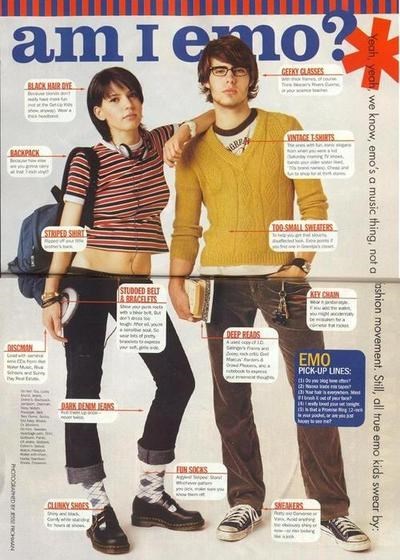
It was 1999 and I actually was 17, so the magazine was very appropirate. I wasn't really into labels, but if pressed I might've said I most closely identified with this emo thing at that time. It wasn't preppy or raver or cowboy or Pentecostal or hip hop. Words like "alternative" and "grunge" no longer meant anything, and I couldn't skate so I wasn't comfortable with "skater." As a label for what your fashion said about your music choices and other interests, it was kind of perfect for artists and weirdos, readers and dreamers, thinkers, people who played instruments and Magic the Gathering, who maybe didn't quite fit in but still managed to be a version of cool. It was the late 90s version of, "hip to be square."
I vividly remember being both excited and put off by this spread. On the one hand, it was awesome to see those of us outside the homecoming court represented in a popular teen magazine. That never happened; not like now. I'd been having Jane Pratt's Sassy withdrawals for about 10 years at that point, and this almost felt like I could maybe find a new home in the form of a glossy grocery store medium. On the other hand, there was this irrational proprietary urge not to let "our" thing become something silly and trendy; something that could get chewed up by the highlighted Tommy Hilfiger set for 15 minutes and then go out of fashion. I mean, get out of our bathtub, Seventeen! This is our thing! Don't make our special, super-secret trends all trendy! Kids are so dumb. I went over each little point and accessory on the spread above with my girlfriend as if it mattered if they got it "right" (like we'd know; as if our hicksville town was the epicenter of a trend movement or something). I remember specifically being put off by the female model's pants, which were clearly too tight and too highwater, and which I now find adorable. The general consensus was, "Well, that's the homogenized magazine version, but yeah, that's kinda how some of my friends and I dress."
And then suddenly emo meant goth and I was old.
So, am I emo? Based on this magazine image, I think I may be more emo now than I was in the 90s. I choose not to think about what that says about me.
It was 1999 and I actually was 17, so the magazine was very appropirate. I wasn't really into labels, but if pressed I might've said I most closely identified with this emo thing at that time. It wasn't preppy or raver or cowboy or Pentecostal or hip hop. Words like "alternative" and "grunge" no longer meant anything, and I couldn't skate so I wasn't comfortable with "skater." As a label for what your fashion said about your music choices and other interests, it was kind of perfect for artists and weirdos, readers and dreamers, thinkers, people who played instruments and Magic the Gathering, who maybe didn't quite fit in but still managed to be a version of cool. It was the late 90s version of, "hip to be square."
I vividly remember being both excited and put off by this spread. On the one hand, it was awesome to see those of us outside the homecoming court represented in a popular teen magazine. That never happened; not like now. I'd been having Jane Pratt's Sassy withdrawals for about 10 years at that point, and this almost felt like I could maybe find a new home in the form of a glossy grocery store medium. On the other hand, there was this irrational proprietary urge not to let "our" thing become something silly and trendy; something that could get chewed up by the highlighted Tommy Hilfiger set for 15 minutes and then go out of fashion. I mean, get out of our bathtub, Seventeen! This is our thing! Don't make our special, super-secret trends all trendy! Kids are so dumb. I went over each little point and accessory on the spread above with my girlfriend as if it mattered if they got it "right" (like we'd know; as if our hicksville town was the epicenter of a trend movement or something). I remember specifically being put off by the female model's pants, which were clearly too tight and too highwater, and which I now find adorable. The general consensus was, "Well, that's the homogenized magazine version, but yeah, that's kinda how some of my friends and I dress."
And then suddenly emo meant goth and I was old.
So, am I emo? Based on this magazine image, I think I may be more emo now than I was in the 90s. I choose not to think about what that says about me.
Wednesday, January 15, 2014
It's Just That Kind of Day
It's a, "Stay in your pajamas," kind of day.
Actually, it's a sleep in, try to get financial aid and other chores done, fail at that endeavor, watch a silly movie, shower, put on DIFFERENT pajamas, and go to your mom's house to try again.
Turns out, it's also a, "Tell Mom your plans and hear supportive things," kind of day. I've had worse days.
Actually, it's a sleep in, try to get financial aid and other chores done, fail at that endeavor, watch a silly movie, shower, put on DIFFERENT pajamas, and go to your mom's house to try again.
Turns out, it's also a, "Tell Mom your plans and hear supportive things," kind of day. I've had worse days.
Sunday, January 12, 2014
What's Ambition?
I think I'm crazy.
I don't have a job and I need a job, but I don't WANT a job. At all. People ask me what I'm going to do now, and all I can think of is things like: finish the book I'm reading, clean my bathroom, dye my hair, write a few things down, decide on a costume for Comic Con, etc. What I'd really like is to go back to school full time. I hope I can make that happen.
I'm 31. I just joined a family ward instead of a singles ward. It makes me feel old, which makes me feel even sillier for not wanting a job and for wanting to dye my hair bright blue. It's like part of me wants to have my 20s because I slept through them. Maybe I will get to in some way.
I've never been ambitious. In every job I've ever had, I've never wanted to advance. I didn't want to become a supervisor or a boss, not even for a bigger pay check. This is the closest to ambitious I've felt in a long time. I want school. I want silliness. I want to say, "Screw it," to all the things that hold me back; all my inhibitions.
I want to be happy.
I don't have a job and I need a job, but I don't WANT a job. At all. People ask me what I'm going to do now, and all I can think of is things like: finish the book I'm reading, clean my bathroom, dye my hair, write a few things down, decide on a costume for Comic Con, etc. What I'd really like is to go back to school full time. I hope I can make that happen.
I'm 31. I just joined a family ward instead of a singles ward. It makes me feel old, which makes me feel even sillier for not wanting a job and for wanting to dye my hair bright blue. It's like part of me wants to have my 20s because I slept through them. Maybe I will get to in some way.
I've never been ambitious. In every job I've ever had, I've never wanted to advance. I didn't want to become a supervisor or a boss, not even for a bigger pay check. This is the closest to ambitious I've felt in a long time. I want school. I want silliness. I want to say, "Screw it," to all the things that hold me back; all my inhibitions.
I want to be happy.
Monday, January 6, 2014
Crossroads
Back in November I lost my horrible job.
Almost immediately, sensations I didn't even realize I'd lost returned to my extremities and food started tasting better. Within a few weeks I had healthier bowels and I started to feel the warmth of empathy returning to my soul. I think my hair is thicker. My smile comes more easily. Slowly, light is returning to the blood in my veins and mine eyes can see the glory.
It was as if a weight was lifted off of my shoulders, admittedly just as another was put on (WhatDoIDoNow???), but any relief at losing a job is a sign that it was the wrong job. I already knew that.
So the question is: what do I do now?
My brother-in-law found me a nice temp job. There isn't even a phone at the desk, which is pretty close to heaven for me. I'm enjoying it, but it'll be over eventually and I wouldn't want to stay there forever even if I could.
I'm afraid of wasting more time. I hated customer service for years but I stayed. It was the hell I knew. I don't want to jump into another job just to pay the bills and get stuck again. The thing about time wasting is I'm already really good at it, so I should work on some other skills now. What I really need to do is go back to school, so I'm setting some goals with time limits on them.
I want to write. I want to make a career of that somehow. I'm afraid that I may not be good enough, but it's what I want. I haven't really persued it because I'm scared, but not trying hasn't made me happy so I'll try trying instead.
One of my goals for 2014 is to publish a blog entry at least once per week. If I miss a week I have to make it up. If I do extra in a week, it can't count toward a future week. This means you'll be hearing from me more often, whoever you are. Thanks for reading.
Almost immediately, sensations I didn't even realize I'd lost returned to my extremities and food started tasting better. Within a few weeks I had healthier bowels and I started to feel the warmth of empathy returning to my soul. I think my hair is thicker. My smile comes more easily. Slowly, light is returning to the blood in my veins and mine eyes can see the glory.
It was as if a weight was lifted off of my shoulders, admittedly just as another was put on (WhatDoIDoNow???), but any relief at losing a job is a sign that it was the wrong job. I already knew that.
So the question is: what do I do now?
My brother-in-law found me a nice temp job. There isn't even a phone at the desk, which is pretty close to heaven for me. I'm enjoying it, but it'll be over eventually and I wouldn't want to stay there forever even if I could.
I'm afraid of wasting more time. I hated customer service for years but I stayed. It was the hell I knew. I don't want to jump into another job just to pay the bills and get stuck again. The thing about time wasting is I'm already really good at it, so I should work on some other skills now. What I really need to do is go back to school, so I'm setting some goals with time limits on them.
I want to write. I want to make a career of that somehow. I'm afraid that I may not be good enough, but it's what I want. I haven't really persued it because I'm scared, but not trying hasn't made me happy so I'll try trying instead.
One of my goals for 2014 is to publish a blog entry at least once per week. If I miss a week I have to make it up. If I do extra in a week, it can't count toward a future week. This means you'll be hearing from me more often, whoever you are. Thanks for reading.
Subscribe to:
Posts (Atom)